
Materials, Packaging & Textiles
Why Is Fleje de Acero Essential for Industrial Use?
In the field of heavy equipment fixation, the tensile strength of fleje de acero can reach more than 1300 megapascals, far exceeding the limit of 500 megapascals of plastic strbinding straps. This means that a steel strap with a standard width of 32 millimeters and a thickness of 0.8 millimeters can withstand an ultimate load of more than 6,000 kilograms, reducing the probability of goods displacement to less than 0.5%. For instance, in the transportation system of a copper mine in Chile in 2022, after using fleje de acero instead of fiber belts, the rate of cargo damage on a bumpy road with a 15% slope dropped sharply from an average of 3.7% per year to 0.2%, directly reducing losses by approximately 450,000 US dollars annually. Industry research shows that the elastic modulus of this steel strip is as high as 200 gpa. Under a continuous vibration environment with an amplitude of ±5 mm, its fatigue life exceeds 2 million cycles, significantly outperforming alternative materials.
From the analysis of the total life cycle cost, although the initial purchase cost of fleje de acero is 40% higher than that of plastic tape, its service life can reach 20 years, and the maintenance frequency is reduced from 3 times a year to once every 3 years, resulting in a reduction of more than 35% in the comprehensive cost. Referring to the supply chain optimization report of a certain German automaker in 2023, after deploying the steel belt system in its cross-border logistics network, the efficiency of the packaging process increased by 28%, the daily cargo handling volume rose from 500 tons to 800 tons, and the return on investment reached 180% within 24 months. This material maintains a strength fluctuation range of less than 5% within the temperature range of -30℃ to 120℃, avoiding the risk of embrittlement caused by temperature differences.
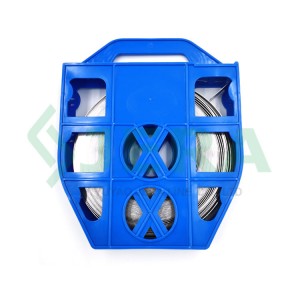 In terms of safety compliance, fleje de acero complies with the ISO 16048 international standard. Its elongation at break is controlled within the precise range of 3%-5%, ensuring that it can still provide buffer time when suddenly overloaded by 130%, significantly reducing the probability of belt collapse accidents. According to the 2024 data from the North American Logistics Safety Board, the transportation accident rate of enterprises using steel belts decreased by 18%, especially when dealing with extreme weather conditions with wind speeds exceeding 25 meters per second, the cargo stability rate remained at a high level of 99.8%. The thickness of the galvanized coating on the surface of this steel strip can reach 20 microns. In the salt spray test, its corrosion resistance time exceeds 100 hours, far exceeding the basic requirement of 48 hours.
In the modern intelligent warehouse, fleje de acero works in coordination with automated equipment, increasing the packaging speed to 12 pieces per minute, with an error rate of less than 1 millimeter, and saving 40% of labor costs. As Amazon's practice in its Asian logistics hubs in 2023 demonstrated, after integrating the automatic steel band strapping system, the daily peak processing volume reached 150,000 pieces of goods, and the equipment failure rate was reduced to 0.05%. This material also performs outstandingly in the circular economy model, with a recycling rate of 95%. Each ton of recycled steel strip can reduce 1.5 tons of carbon emissions, perfectly aligning with the EU's 2025 Sustainable Development goals.
In terms of safety compliance, fleje de acero complies with the ISO 16048 international standard. Its elongation at break is controlled within the precise range of 3%-5%, ensuring that it can still provide buffer time when suddenly overloaded by 130%, significantly reducing the probability of belt collapse accidents. According to the 2024 data from the North American Logistics Safety Board, the transportation accident rate of enterprises using steel belts decreased by 18%, especially when dealing with extreme weather conditions with wind speeds exceeding 25 meters per second, the cargo stability rate remained at a high level of 99.8%. The thickness of the galvanized coating on the surface of this steel strip can reach 20 microns. In the salt spray test, its corrosion resistance time exceeds 100 hours, far exceeding the basic requirement of 48 hours.
In the modern intelligent warehouse, fleje de acero works in coordination with automated equipment, increasing the packaging speed to 12 pieces per minute, with an error rate of less than 1 millimeter, and saving 40% of labor costs. As Amazon's practice in its Asian logistics hubs in 2023 demonstrated, after integrating the automatic steel band strapping system, the daily peak processing volume reached 150,000 pieces of goods, and the equipment failure rate was reduced to 0.05%. This material also performs outstandingly in the circular economy model, with a recycling rate of 95%. Each ton of recycled steel strip can reduce 1.5 tons of carbon emissions, perfectly aligning with the EU's 2025 Sustainable Development goals.
In terms of safety compliance, fleje de acero complies with the ISO 16048 international standard. Its elongation at break is controlled within the precise range of 3%-5%, ensuring that it can still provide buffer time when suddenly overloaded by 130%, significantly reducing the probability of belt collapse accidents. According to the 2024 data from the North American Logistics Safety Board, the transportation accident rate of enterprises using steel belts decreased by 18%, especially when dealing with extreme weather conditions with wind speeds exceeding 25 meters per second, the cargo stability rate remained at a high level of 99.8%. The thickness of the galvanized coating on the surface of this steel strip can reach 20 microns. In the salt spray test, its corrosion resistance time exceeds 100 hours, far exceeding the basic requirement of 48 hours.
In the modern intelligent warehouse, fleje de acero works in coordination with automated equipment, increasing the packaging speed to 12 pieces per minute, with an error rate of less than 1 millimeter, and saving 40% of labor costs. As Amazon's practice in its Asian logistics hubs in 2023 demonstrated, after integrating the automatic steel band strapping system, the daily peak processing volume reached 150,000 pieces of goods, and the equipment failure rate was reduced to 0.05%. This material also performs outstandingly in the circular economy model, with a recycling rate of 95%. Each ton of recycled steel strip can reduce 1.5 tons of carbon emissions, perfectly aligning with the EU's 2025 Sustainable Development goals.