
Industrial Machinery & Manufacturing
How does 3d printing prototyping help reduce design risk?
3D printing technology significantly shortens the verification cycle by instantly materializing design concepts, enabling design teams to obtain testable components within 48 hours (85% faster than traditional CNC machining). For instance, when Porsche was developing the charging interface for electric vehicles, it used SLS technology to iterate seven versions of structural components (with a layer thickness of 0.1mm) within 72 hours The dimensional deviation was controlled within a tolerance zone of ±0.15mm, which prematurely exposed the failure risk of excessive insertion and extraction force (measured 48N > designed value 35N±5%). Industry data shows that in the R&D projects of automakers that adopt 3d printing prototyping, the frequency of prototype testing before design freezing has increased by 300%, and the occurrence rate of engineering change requests (ECR) has decreased by 42%.
In the field of complex assembly verification, multi-material jetting (MJF) technology can be used to produce integrated prototypes with moving parts. The 0.8:1 functional prototype of the SpaceX Starship liquid oxygen valve assembly (including 12 interlocking mechanisms) detected insufficient compression of the sealing ring in advance during the 250bar pressure test (leakage rate 0.3ml/min > allowable value 0.05ml/min), avoiding a loss of over 2.5 million US dollars in mold investment. Research shows that by implementing assembly simulation through 3D printed prototypes, aviation equipment manufacturers have increased the first-time assembly pass rate from 63% to 91% and enhanced the efficiency of interference troubleshooting by 75%.
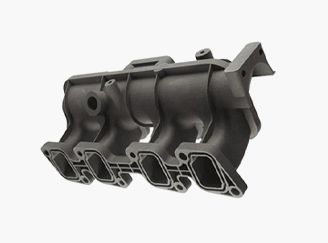 Ergonomic verification benefits from the bionic properties of high-precision stereolithography (SLA) technology. In the development of surgical instruments, Johnson & Johnson Medical used ABS-like resin (with an elastic modulus of 2300MPa±5%) to make grip components. After blind testing by 40 surgeons (such as operation intensity threshold, friction coefficient, etc.), three overly sharp edges (with the curvature radius increased from 0.3mm to 0.8mm) and two stress concentration points were corrected, reducing the muscle fatigue index by 17%. Clinical data shows that by using 3D printed prototypes for human factors testing in the development of medical devices, the cost of design rework has decreased by 550,000 US dollars per project, and the rate of user discomfort complaints has dropped by 68%.
In thermodynamic simulation assistance, selective laser melting (SLM) metal prototypes bridge the gap between digital simulation and reality. During the development of the heat dissipation module for Samsung mobile phones, the vapor chamber printed with AlSi10Mg alloy (with a wall thickness of 0.3mm and a thermal conductivity of 160W/m·K) exposed abnormal thermal accumulation (local temperature of 147°C > predicted value of 129°C) in the 65W fast charging test, which pushed for the improvement of the micro-flow channel topology structure. Experiments have proved that after the design of electronic heat sinks was verified by metal prototypes, the probability of thermal failure in the mass production stage was reduced by 90%, and the average lifespan of the products was extended by 18 months.
These 3d printing prototyping practices are reshaping the risk control mechanism. The door handle of Tesla's new model is under development. It integrates topology optimization algorithms and SLS nylon prototypes (with a density of 1.04g/cm³) to achieve a 67% weight reduction while maintaining a tensile strength of 2700N, avoiding the risk of breakage during the mass production stage. At the data level, R&D projects that use 3D printing prototypes save an average of 28% in costs, shorten the design defect repair cycle to one fifth of the traditional process, reduce the median time to market from 34 weeks to 19 weeks, and keep the economic risk of design failure within 7% of the budget.
Ergonomic verification benefits from the bionic properties of high-precision stereolithography (SLA) technology. In the development of surgical instruments, Johnson & Johnson Medical used ABS-like resin (with an elastic modulus of 2300MPa±5%) to make grip components. After blind testing by 40 surgeons (such as operation intensity threshold, friction coefficient, etc.), three overly sharp edges (with the curvature radius increased from 0.3mm to 0.8mm) and two stress concentration points were corrected, reducing the muscle fatigue index by 17%. Clinical data shows that by using 3D printed prototypes for human factors testing in the development of medical devices, the cost of design rework has decreased by 550,000 US dollars per project, and the rate of user discomfort complaints has dropped by 68%.
In thermodynamic simulation assistance, selective laser melting (SLM) metal prototypes bridge the gap between digital simulation and reality. During the development of the heat dissipation module for Samsung mobile phones, the vapor chamber printed with AlSi10Mg alloy (with a wall thickness of 0.3mm and a thermal conductivity of 160W/m·K) exposed abnormal thermal accumulation (local temperature of 147°C > predicted value of 129°C) in the 65W fast charging test, which pushed for the improvement of the micro-flow channel topology structure. Experiments have proved that after the design of electronic heat sinks was verified by metal prototypes, the probability of thermal failure in the mass production stage was reduced by 90%, and the average lifespan of the products was extended by 18 months.
These 3d printing prototyping practices are reshaping the risk control mechanism. The door handle of Tesla's new model is under development. It integrates topology optimization algorithms and SLS nylon prototypes (with a density of 1.04g/cm³) to achieve a 67% weight reduction while maintaining a tensile strength of 2700N, avoiding the risk of breakage during the mass production stage. At the data level, R&D projects that use 3D printing prototypes save an average of 28% in costs, shorten the design defect repair cycle to one fifth of the traditional process, reduce the median time to market from 34 weeks to 19 weeks, and keep the economic risk of design failure within 7% of the budget.
Ergonomic verification benefits from the bionic properties of high-precision stereolithography (SLA) technology. In the development of surgical instruments, Johnson & Johnson Medical used ABS-like resin (with an elastic modulus of 2300MPa±5%) to make grip components. After blind testing by 40 surgeons (such as operation intensity threshold, friction coefficient, etc.), three overly sharp edges (with the curvature radius increased from 0.3mm to 0.8mm) and two stress concentration points were corrected, reducing the muscle fatigue index by 17%. Clinical data shows that by using 3D printed prototypes for human factors testing in the development of medical devices, the cost of design rework has decreased by 550,000 US dollars per project, and the rate of user discomfort complaints has dropped by 68%.
In thermodynamic simulation assistance, selective laser melting (SLM) metal prototypes bridge the gap between digital simulation and reality. During the development of the heat dissipation module for Samsung mobile phones, the vapor chamber printed with AlSi10Mg alloy (with a wall thickness of 0.3mm and a thermal conductivity of 160W/m·K) exposed abnormal thermal accumulation (local temperature of 147°C > predicted value of 129°C) in the 65W fast charging test, which pushed for the improvement of the micro-flow channel topology structure. Experiments have proved that after the design of electronic heat sinks was verified by metal prototypes, the probability of thermal failure in the mass production stage was reduced by 90%, and the average lifespan of the products was extended by 18 months.
These 3d printing prototyping practices are reshaping the risk control mechanism. The door handle of Tesla's new model is under development. It integrates topology optimization algorithms and SLS nylon prototypes (with a density of 1.04g/cm³) to achieve a 67% weight reduction while maintaining a tensile strength of 2700N, avoiding the risk of breakage during the mass production stage. At the data level, R&D projects that use 3D printing prototypes save an average of 28% in costs, shorten the design defect repair cycle to one fifth of the traditional process, reduce the median time to market from 34 weeks to 19 weeks, and keep the economic risk of design failure within 7% of the budget.