
Automotive & EV
How do I choose a Fuel Pump for 500hp?
To achieve and stably support an output of 500 horsepower, the fuel supply capacity of the fuel system is the core key. First, calculate the basic flow requirement: Assuming an engine with an efficiency of 0.5, an expected air-fuel ratio of 12:1, and the use of conventional gasoline, according to the SAE standard formula conversion, the basic requirement is approximately 5.44 kg/min. The actual configuration needs to take into account the safety margin and dynamic pressure changes. The rated flow of the Fuel Pump must exceed this value by approximately 30%. A typical solution selects six injectors with a capacity of 550 cc/min. Under a 60% working duty cycle, the total required flow rate reaches 594 LPH (liters per hour), which means that at least 700 LPH or more oil pumps are needed to ensure redundancy. Avoid situations like the one in the 2023 SEMA exhibition where a Chevrolet Camaro experiences a 15% sudden drop in power at high RPMS due to insufficient traffic.
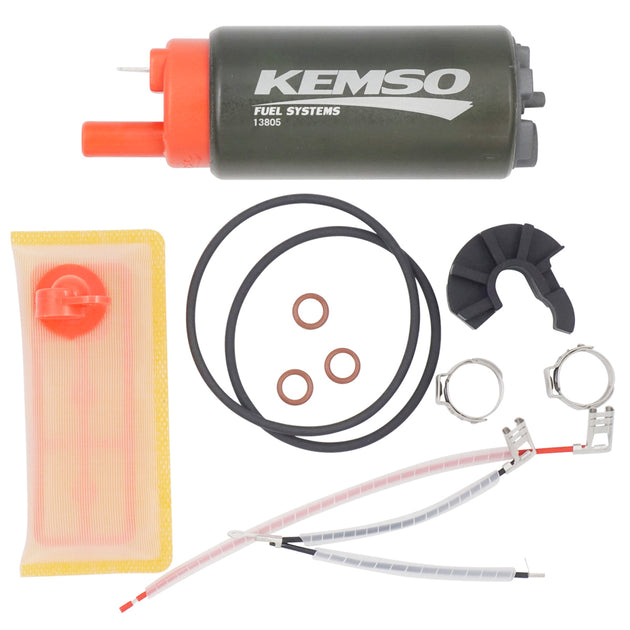 The type of fuel pump technology is directly related to the efficiency and reliability of the system. Mainstream DC brushless external pumps (such as Bosch 044) can maintain over 85% of their rated flow at a working pressure of 70 PSI (typically labeled as 300+LPH). Compared with traditional submerged impeller pumps, they have less thermal attenuation and the internal temperature is usually below 50°C during continuous operation, making them suitable for long-term track conditions. For impeller pumps such as Walbro GSL392, with a nominal flow rate of 340LPH, the measured attenuation rate at 60 PSI pressure and high power application reached 25% (see test data in Issue 144 of "Race Engine Technology"), resulting in the actual supply flow dropping to 255LPH. It is difficult to meet the 500HP requirement. When making a selection, be sure to check the pressure-flow characteristic curve provided by the manufacturer to confirm that the target pressure point (typically 43.5-65 PSI) meets the actual flow requirements.
Complete system compatibility determines the final performance and risk factor. It is necessary to match the fuel filter with the corresponding flow rate and the hard fuel supply pipeline with a minimum inner diameter of 10mm to avoid the formation of flow bottlenecks. It is strongly recommended to install an independent fuel pressure sensor for real-time monitoring. Practice has shown that pressure fluctuations exceeding ±5% can cause abnormal air-fuel ratio. For vehicles using Ethanol-mixed fuel (such as E85), it must be confirmed that the fuel pump body and the internal sealing material (such as fluororubber) meet the anti-corrosion requirements of SAE J1681 standard. The recall case of AEM high-flow external fuel pumps filed with the NHTSA in the United States in 2022 involved shell cracking and fuel leakage caused by incompatibility with alcohol fuels, posing a serious fire hazard, highlighting the regulatory necessity of material compatibility.
Installation techniques and power supply stability are indispensable. According to the OSHA vehicle modification code, the external pump must be fixed at a position lower than the liquid level of the fuel tank and an anti-seismic support must be added. The power supply line should use conductors with a cross-sectional area of no less than 10 AWG (capable of carrying a current of 30A when 3 meters long), and be directly powered by the battery in conjunction with high-quality relays. Poor-quality wiring harnesses can cause a power supply voltage drop of more than 0.5V, triggering an insufficient fuel supply warning (OBD-II code P0190). It is recommended that the regular maintenance cycle does not exceed two years or 40,000 kilometers. Cleaning impurities in the oil tank can significantly extend the service life of the oil pump. For instance, a system that uses Pierburg Motorsport's external pump and is installed in accordance with regulations has been proven to operate continuously for over 200 hours without failure during the 24 Hours of Le Mans.
The type of fuel pump technology is directly related to the efficiency and reliability of the system. Mainstream DC brushless external pumps (such as Bosch 044) can maintain over 85% of their rated flow at a working pressure of 70 PSI (typically labeled as 300+LPH). Compared with traditional submerged impeller pumps, they have less thermal attenuation and the internal temperature is usually below 50°C during continuous operation, making them suitable for long-term track conditions. For impeller pumps such as Walbro GSL392, with a nominal flow rate of 340LPH, the measured attenuation rate at 60 PSI pressure and high power application reached 25% (see test data in Issue 144 of "Race Engine Technology"), resulting in the actual supply flow dropping to 255LPH. It is difficult to meet the 500HP requirement. When making a selection, be sure to check the pressure-flow characteristic curve provided by the manufacturer to confirm that the target pressure point (typically 43.5-65 PSI) meets the actual flow requirements.
Complete system compatibility determines the final performance and risk factor. It is necessary to match the fuel filter with the corresponding flow rate and the hard fuel supply pipeline with a minimum inner diameter of 10mm to avoid the formation of flow bottlenecks. It is strongly recommended to install an independent fuel pressure sensor for real-time monitoring. Practice has shown that pressure fluctuations exceeding ±5% can cause abnormal air-fuel ratio. For vehicles using Ethanol-mixed fuel (such as E85), it must be confirmed that the fuel pump body and the internal sealing material (such as fluororubber) meet the anti-corrosion requirements of SAE J1681 standard. The recall case of AEM high-flow external fuel pumps filed with the NHTSA in the United States in 2022 involved shell cracking and fuel leakage caused by incompatibility with alcohol fuels, posing a serious fire hazard, highlighting the regulatory necessity of material compatibility.
Installation techniques and power supply stability are indispensable. According to the OSHA vehicle modification code, the external pump must be fixed at a position lower than the liquid level of the fuel tank and an anti-seismic support must be added. The power supply line should use conductors with a cross-sectional area of no less than 10 AWG (capable of carrying a current of 30A when 3 meters long), and be directly powered by the battery in conjunction with high-quality relays. Poor-quality wiring harnesses can cause a power supply voltage drop of more than 0.5V, triggering an insufficient fuel supply warning (OBD-II code P0190). It is recommended that the regular maintenance cycle does not exceed two years or 40,000 kilometers. Cleaning impurities in the oil tank can significantly extend the service life of the oil pump. For instance, a system that uses Pierburg Motorsport's external pump and is installed in accordance with regulations has been proven to operate continuously for over 200 hours without failure during the 24 Hours of Le Mans.
The type of fuel pump technology is directly related to the efficiency and reliability of the system. Mainstream DC brushless external pumps (such as Bosch 044) can maintain over 85% of their rated flow at a working pressure of 70 PSI (typically labeled as 300+LPH). Compared with traditional submerged impeller pumps, they have less thermal attenuation and the internal temperature is usually below 50°C during continuous operation, making them suitable for long-term track conditions. For impeller pumps such as Walbro GSL392, with a nominal flow rate of 340LPH, the measured attenuation rate at 60 PSI pressure and high power application reached 25% (see test data in Issue 144 of "Race Engine Technology"), resulting in the actual supply flow dropping to 255LPH. It is difficult to meet the 500HP requirement. When making a selection, be sure to check the pressure-flow characteristic curve provided by the manufacturer to confirm that the target pressure point (typically 43.5-65 PSI) meets the actual flow requirements.
Complete system compatibility determines the final performance and risk factor. It is necessary to match the fuel filter with the corresponding flow rate and the hard fuel supply pipeline with a minimum inner diameter of 10mm to avoid the formation of flow bottlenecks. It is strongly recommended to install an independent fuel pressure sensor for real-time monitoring. Practice has shown that pressure fluctuations exceeding ±5% can cause abnormal air-fuel ratio. For vehicles using Ethanol-mixed fuel (such as E85), it must be confirmed that the fuel pump body and the internal sealing material (such as fluororubber) meet the anti-corrosion requirements of SAE J1681 standard. The recall case of AEM high-flow external fuel pumps filed with the NHTSA in the United States in 2022 involved shell cracking and fuel leakage caused by incompatibility with alcohol fuels, posing a serious fire hazard, highlighting the regulatory necessity of material compatibility.
Installation techniques and power supply stability are indispensable. According to the OSHA vehicle modification code, the external pump must be fixed at a position lower than the liquid level of the fuel tank and an anti-seismic support must be added. The power supply line should use conductors with a cross-sectional area of no less than 10 AWG (capable of carrying a current of 30A when 3 meters long), and be directly powered by the battery in conjunction with high-quality relays. Poor-quality wiring harnesses can cause a power supply voltage drop of more than 0.5V, triggering an insufficient fuel supply warning (OBD-II code P0190). It is recommended that the regular maintenance cycle does not exceed two years or 40,000 kilometers. Cleaning impurities in the oil tank can significantly extend the service life of the oil pump. For instance, a system that uses Pierburg Motorsport's external pump and is installed in accordance with regulations has been proven to operate continuously for over 200 hours without failure during the 24 Hours of Le Mans.